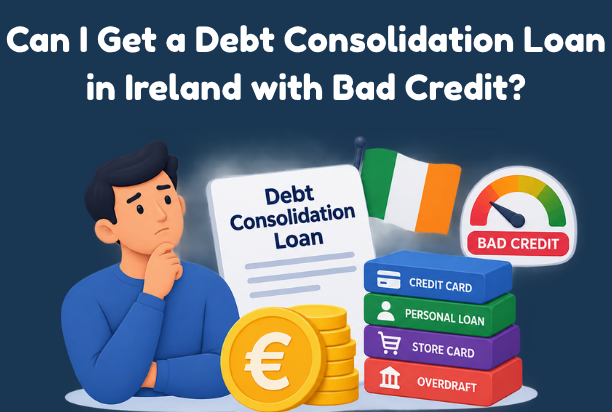
Yes, self-employed individuals may get a debt consolidation loan in Ireland. However, the income remains inconsistent due to the seasonal business. Thus, one goes through strict affordability verification to qualify for a loan. Self-employed individuals with a stable and verified income and creditworthiness may get a loan to consolidate debts in Ireland.
What are debt consolidation loans?
A debt consolidation loan is a financial facility that helps you manage payments by consolidating them into a single monthly instalment. You can merge multiple pending payments, like taxes, rent, stationery loans, credit cards, business loans, and utility bills. It lowers your interest liabilities, monthly payment and overall amount that you are due to pay.
It could be a secured and unsecured loan depending on your cash needs and ability to pay. It reduces your credit utilisation ratio making you eligible for affordable loans as a self-employed.
How does a debt consolidation loan help a self-employed individual?
A debt consolidation loan helps a self-employed individual in Ireland by reducing the monthly liabilities and streamlining the debt payments into an affordable payment structure. It reduces the stress of managing multiple payments by dealing with only one creditor instead of many. Here are other benefits of consolidating debts as a self-employed individual.
Fixed loan payment structure
The repayments on a debt consolidation remain fixed until the loan term. It is thus ideal for a self-employed individual with inconsistent income to arrive at an amount that they can comfortably pay monthly. It provides them with the clarity of the amount they must save to repay the dues.
Lower interest rates
Consolidating heavy and expensive debts lowers the overall interest liabilities on the dues. Most self-employed find tackling heavy credit card payments challenging. The average income of the self-employed in Ireland is €52500. Thus, managing multiple debts and spending on needful equipment and other stuff becomes difficult. Here, debt consolidation proves helpful as it helps save money on interest costs.
It grants them the opportunity to re-invest the spare cash in business and boost the cash flow. It ultimately helps them enhance growth.
Improves credit reliability
Getting a debt consolidation loan and repaying it on time increases your financial reliability for creditors. Thus, they consider your finances and debt management in a positive light. It thus eases the path to getting fair-rated loans and credit cards in future.
How can a self-employed person consolidate debts with bad credit?
If seeking a debt consolidation loan in Ireland for a bad credit score, know the following aspects. It may help you improve your chances of getting a loan:
1. Try to build strong income evidence
It is important to prove your income to get a debt consolidation loan in Ireland. You must provide Revenue 11 tax returns and certified bank accounts for 2-3 years. Generally, low operating periods create doubts among the loan providers regarding the payments. Therefore, a lengthy operating history might help. Also, keep the following aspects in mind:
- Keep your tax, bank statements, and accounts updated
- Recent client contracts and project briefs
- Manage personal bank account and finances.
2. Maintain your business and personal accounts detached
Not having a separate business account may lead to financial confusion. Thus, it may lead to immediate loan rejection. Thus, you must have separate business and personal accounts. Using a dedicated business loan account for business-related purposes helps you build a credit history.
It makes it easier for the loan providers to verify the income and finances. It reduces the ambiguity of financial management and helps one qualify for the loan. Here is how you can approach distinguishing your personal and business finances:
- Open a separate business and personal bank account
- Use bank accounts according to the purpose. Don’t use a personal account for business needs.
- Transfer a set amount from the business to the personal account on monthly basis.
- Use budgeting tools and tax management software to pay the dues on time
3. Fix errors in your credit report
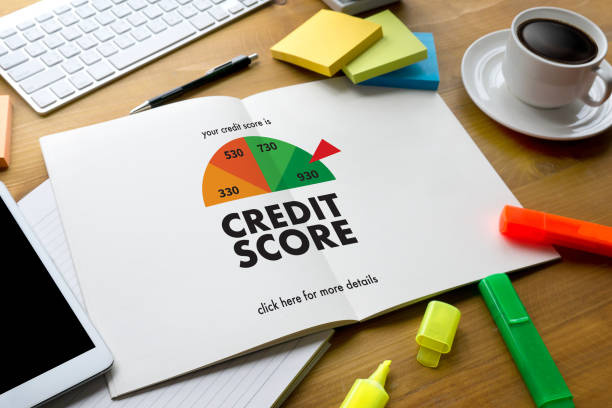
Basic delinquencies in a credit report may affect the chances of qualifying for a loan. Moreover, a debt consolidation loan requires you to consider the payments affecting your financial management. It is about choosing and consolidating only debts that affect regular payments. Afterwards, you can ask for an upgraded report from the Central Credit Register (CCR) or the Irish Credit Bureau (ICB).
How to inject errors in your credit report?
Step 1: Get your credit report from CCR and analyse the errors.
Step 2: Contact the loan provider to correct it
Step 3: Add a (Notice of Correction) in case of poor financial management or falling finances.
It can take up to 45 days to get an updated report after fixing or reporting errors. Always provide clear proof, such as bank statements, salary, or a letter from the bank, to support your case.
Apart from this, try to be regular with the loan payments. Set direct debits on the major and small debts to avoid missing any payments. It also helps you ensure reliable finances, just like updating and reporting credit report errors.
4) Try to limit expenses (personal too)
If you want to fetch favourable terms on debt consolidation loans, you must limit your expenses. Having disciplined expenses implies a low debt burden and more cash flow.
Identify your unnecessary expenses, like changing the furniture of the office if it’s in good condition or spending heavily on meeting your personal goals, like dining out. Also, try to pay off some debts before applying for a new loan. However, with debt consolidation, you can just strengthen your personal and business repayment capability.
5) Apply with a personal guarantee
A personal guarantee is a financial agreement between a loan provider and the self-employed. It lists the ability of the creditor to recoup for losses using personal assets if it fails to settle it with business assets. In this, the creditor may tap personal assets to get their dues from the defaulter. However, applying with a personal guarantee helps one fetch better interest rates.
Bottom line
Thus, you can get a debt consolidation loan as a self-employed individual if you can afford to repay the debt on time. You must prove that by providing clear and authentic documents like bank statements, taxes, etc.
Identify the debts that you want to consolidate to fetch better terms. Usually, the payments with high interest and penalties are ideal for consolidation. However, check the repayment term also.

Erin Delaney is a financial writer and content strategist with strong hold on personal finance and lending related topics. She is well aware of the fact that talking about money or loans can be stressful for borrowers. To help them make informed financial decisions, she has dedicated her 10 years of her career in making complex topics like loans, bad credit, etc., easy to understand for them.
Her speciality is to write clear, informative and reader-friendly content. She keeps herself updated with the latest trends happening in the lending industry to deliver information that is useful for the borrowers.