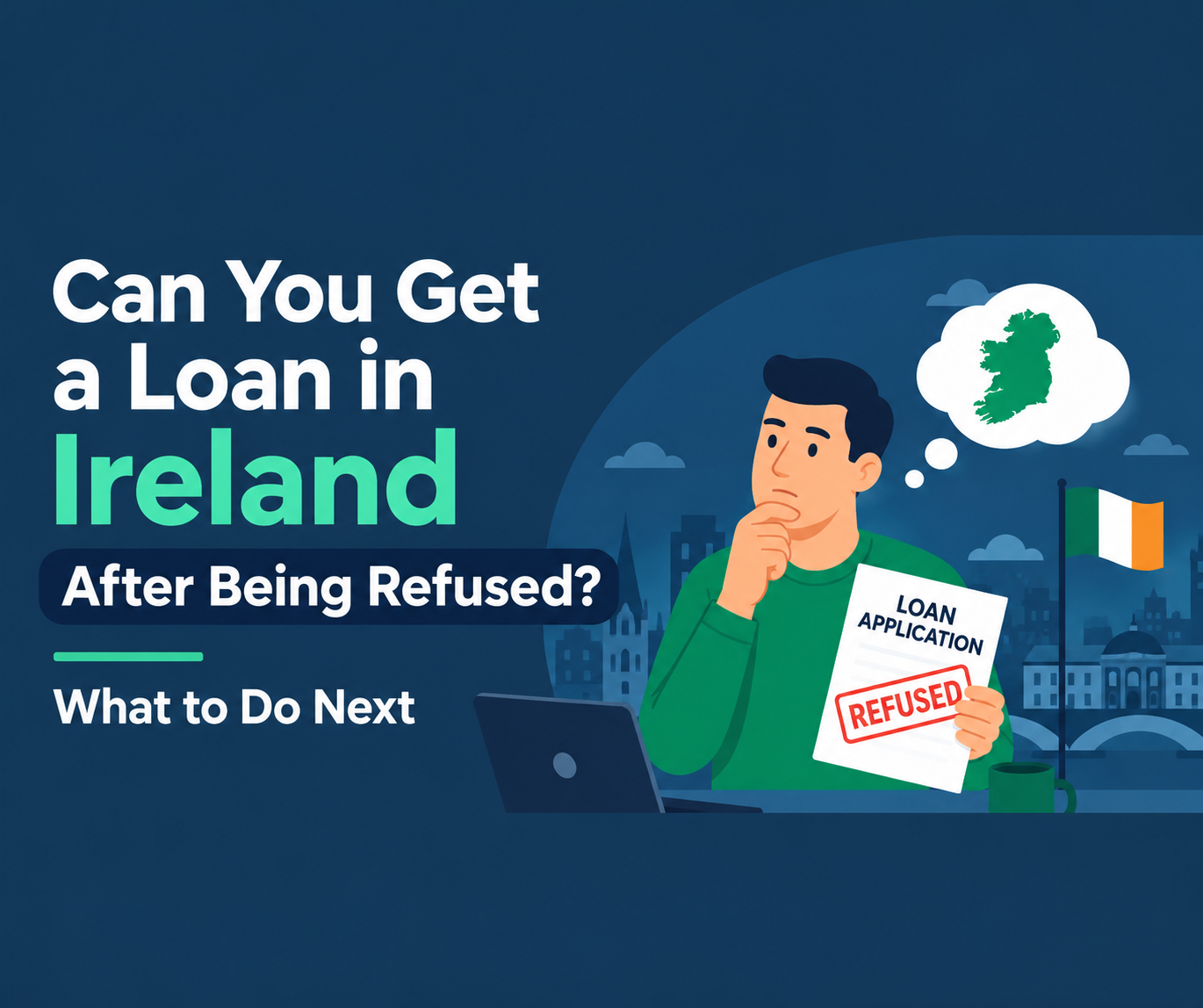
Yes, you can get a loan in Ireland after being refused. You need to identify the reason for being declined. Improve your credit profile and reapply.
Whether you need a personal loan or a mortgage, rejection can be discouraging. Lenders run an affordability assessment before approving your loan application, and they are not legally bound to inform you of the reason for declining you. Still, they can apprise you of the reason for refusal if you ask them.
What are the common reasons for loan refusal?
The common reasons for declining your loan application include:
- Issues with your credit history – missed payments and defaults can call your creditworthiness into question.
- Affordability concerns – lenders suspect that you will not be able to make payments given your current income level.
- Documentation gaps – a lack of documents supporting income, cash flows, and your overall financial condition is the most common reason for the rejection of large loans.
- A high debt-to-income ratio – an ideal debt-to-income ratio is 30%. The lower, the better.
What steps should you take after being refused?
Do not rush to another lender. Rushing into multiple applications will damage your credit history. You should figure out the reason and then reapply.
- Know the reason from the lender
Contact your lender and request feedback. They might inform you of the reason for declining your application. If your poor credit history is the reason, consider applying for loans for bad credit in Ireland from specialist lenders. If you are told that your debt-to-income ratio is too high, you should try to settle your existing debts first.
- Check your credit record
The Central Credit Register maintains your credit record. Make sure you check your credit history before applying for a loan. There can be some inaccuracies and errors. If you spot any errors or inaccuracies, you should get them fixed as soon as possible.
- Wait and build stability
Sometimes, your loan application is rejected because lenders find that your income is insufficient for your repayment capacity. If that is the case, you should wait and try improving your overall financial situation before reapplying for a loan.
It is vital that your employment has been stable for at least six months. If you are looking to apply for a business loan, you should reach the breakeven point before submitting a loan application.
If you are taking out large loans such as the best personal loans in Ireland, car loans and mortgages, your overall financial condition must be strong and stable.
- Try alternative lenders
Not all lenders might be willing to accept your loan application. You will need to meet their acceptance criteria. Sometimes, loan applications are refused because you apply to a lender whose criteria you do not meet. Here comes the role of a broker.
With the help of a broker, you can easily choose a lender whose criteria you meet. In addition, you should consider alternative lenders such as credit unions. They are more flexible and affordable than online lenders. You can save a lot of money on interest despite having a poor credit history.
You can consider government-backed schemes if you need to borrow money for your business. For instance, Microfinance Ireland and the Local Enterprise Office can be your destination.
Tips to improve your chances of being accepted
Here are the ways to improve your chances of being accepted:
- You should choose a realistic loan amount. Demonstrate your repayment capacity.
- Consider choosing a loan with a shorter repayment period, if possible, in order to save money on interest.
- Make sure that you provide all documents to strengthen your application.
- Use a broker, especially if you have to take out personal loans, car loans, and mortgages. They will connect you with lenders whose acceptance criteria you meet. They can also help you get exclusive deals.
- Create savings. They will preclude you from using loans to cover unexpected expenses. Savings are a must to reduce your reliance on debt.
To wrap up
You can get a loan in Ireland after being refused, provided you fix the issue after rejection. You can get feedback from your lender, but the most common reasons include extremely poor credit history, lack of documents, and affordability concerns. Try to improve your overall credit profile to increase your chances of acceptance.
FAQs
- Does a loan refusal affect your credit history?
The refusal itself doesn’t damage your credit history, but the application is recorded on the Central Credit Register. Multiple applications in a short space of time can badly affect your credit history.
- How long should I wait before reapplying?
It depends on the reason for refusal. If it is a documentation-related issue, you can reapply promptly. If it comes down to credit-related issues, you may need at least six months to rebuild your credit history.
- Does working with a broker guarantee loan approval?
No, because the role of a broker is to connect you to a potential lender based on your overall credit profile, but lenders make the decision after running an affordability check, which includes perusal of your credit history, income records, and current debt obligations. If your lender finds that you might not be able to keep up with repayments, you will be rejected.

Erin Delaney is a financial writer and content strategist with strong hold on personal finance and lending related topics. She is well aware of the fact that talking about money or loans can be stressful for borrowers. To help them make informed financial decisions, she has dedicated her 10 years of her career in making complex topics like loans, bad credit, etc., easy to understand for them.
Her speciality is to write clear, informative and reader-friendly content. She keeps herself updated with the latest trends happening in the lending industry to deliver information that is useful for the borrowers.